Biomolecule Anchoring & Retention
Connect molecular information to the expansion gel. Explore chemistry for retaining biological targets and labels through sample processing.
The connection that carries information through expansion
An expanded image depends on which molecular information remains attached to the hydrogel. During preparation, biological material may be digested or denatured to allow the sample to expand. Anchoring establishes the chemical connections that carry selected targets or labels through these steps.
Anchoring reagents bring together two functions: a reactive group that couples to the molecule being modified and a polymerisable group that becomes incorporated into the gel. The coupling chemistry must match the target, from accessible primary amines on proteins to reactive sites on nucleic acids.
Some workflows require this gel attachment alone. Others also need a fluorescent label or a handle for later detection. Choosing the anchoring strategy around both the target and the planned readout helps connect sample preparation with the final image.

Why choose Chrometra?
Anchoring with or without a detection tag
Choose dedicated linkers or formats that combine hydrogel attachment with labelling functionality, according to the role needed in your workflow.
Chemistry for different molecular targets
Amine-reactive and nucleic acid-reactive options address the different chemical requirements of proteins, antibodies, DNA and RNA.
A covalent connection to the gel
Polymerisable functionality enables modified targets or labels to become incorporated into the hydrogel during gelation.
Reagents for biomolecule anchoring & retention
Compare reactive groups, linker formats and detection functionality for the molecules you need to retain.
Explore related applications
See how anchoring supports imaging questions centred on protein localisation and the spatial organisation of nucleic acids.
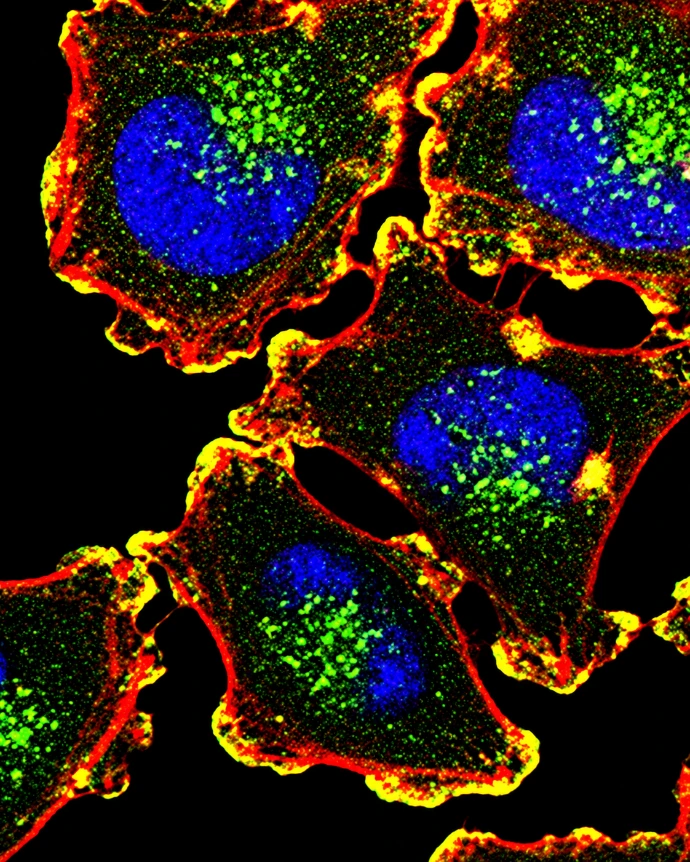
Protein & Antibody Labelling
Prepare protein and antibody labels with chemistry for conjugation, fluorescent detection and incorporation into the expansion gel.
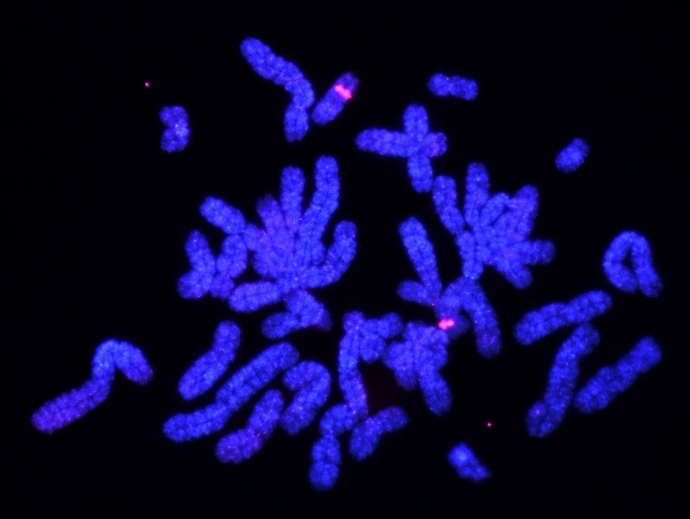
Nucleic Acid Labelling & Retention
Investigate DNA and RNA organisation with approaches that connect nucleic acid retention to the chosen imaging readout.
Let's talk about your experiment
Tell us about your work and what you’d like to achieve. We’re here to answer your labelling questions and help you choose the right reagents. We'd love to hear from you!