Glycan Imaging
See cellular organisation through its carbohydrate patterns. Explore fluorescent lectin labelling for studying glycan-rich structures in expanded cells and tissues.
A closer look at glycan distribution
Glycans decorate proteins and lipids throughout cells and tissues, contributing to cell recognition, signalling and interactions with the surrounding environment. Their distribution offers a distinctive view of cell surfaces, intracellular compartments and extracellular structures.
Lectins make these patterns accessible by recognising particular carbohydrate motifs. Different binding preferences reveal different aspects of glycan organisation, with staining determined by both the presence and accessibility of the recognised residues.
For expansion microscopy, the lectin-associated label must also be retained during processing. In the default workflow, fixed specimens are stained before gelation, then an amine-reactive anchoring reagent connects the lectin–fluorophore conjugate to the hydrogel. This carries the labelled pattern into the expanded sample for fluorescence imaging.

Why choose Chrometra?
Anchoring built in
Pre-gelation staining is followed by amine-reactive anchoring to support retention of the lectin-associated label in the hydrogel.
Contrast guided by glycan recognition
Lectin probes recognise defined carbohydrate motifs, helping you investigate glycan-rich structures according to their molecular composition.
Fluorescent options for your channels
Multiple fluorescent variants help you plan lectin staining alongside the other labels in your imaging experiment.
Reagents for glycan imaging
Compare lectin binding preferences and fluorescent variants for the carbohydrate motifs you want to investigate.
Explore related applications
Connect glycan distribution with membrane organisation, or take a closer look at the chemistry used to retain labels during expansion.
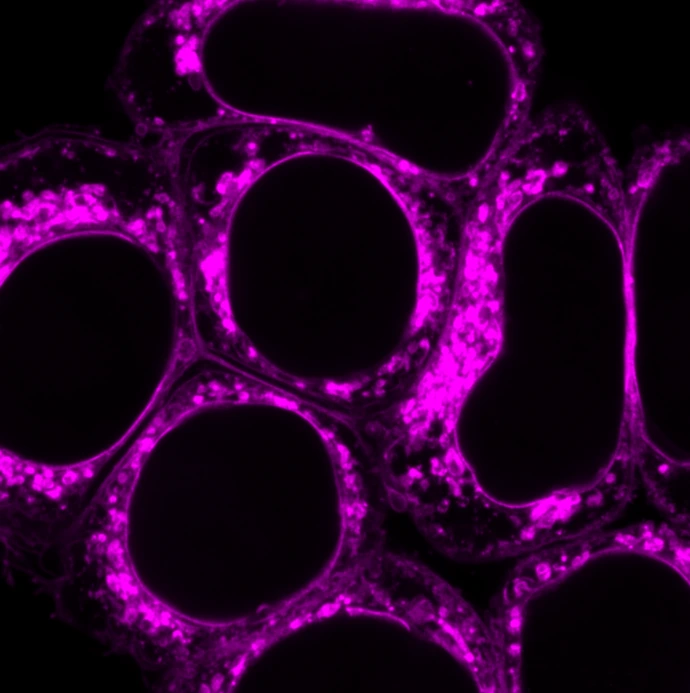
Membrane Imaging
Study cellular boundaries and compartments through lipid-based labelling, providing a complementary view of membrane-rich structures.
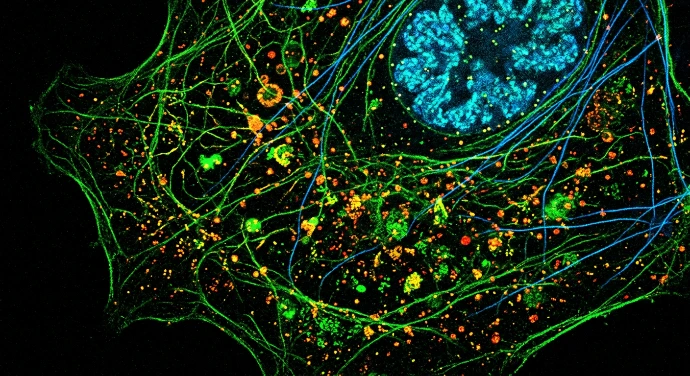
Biomolecule Anchoring & Retention
Understand how reactive chemistry connects biological targets and labels to the hydrogel for retention through sample processing.
Let's talk about your experiment
Tell us about your work and what you’d like to achieve. We’re here to answer your labelling questions and help you choose the right reagents. We'd love to hear from you!