Post-Expansion Labelling
Separate target recognition from fluorescent detection. Explore approaches that retain labelling sites through processing and introduce fluorescence at a later stage.
Establish the label.
Introduce fluorescence later.
The timing of fluorescent labelling matters in expansion microscopy. Dyes introduced before gelation are exposed to the preparation steps that follow, which can affect the signal available for imaging. Introducing fluorescence later avoids exposing the final fluorescent label to those earlier steps.
In these workflows, target recognition and anchoring are established first. A reactive handle or detection tag is retained in the hydrogel, providing a site for subsequent fluorescent labelling. Depending on the reagent and protocol, detection is introduced after gelation and processing or after expansion.
This separation allows the targeting chemistry and fluorescent readout to be planned individually. The retained handle determines the compatible detection chemistry, while the fluorescent reagent is selected to suit the imaging channels and other labels in the sample.

Why choose Chrometra?
Targeting established before expansion
Probes introduce target-associated handles or tags before gelation, supporting later detection of the retained labelling pattern.
Fluorescence introduced after processing
Later labelling avoids exposing the final fluorescent detection reagent to gelation and the processing steps completed before its addition.
Different routes to detection
Reactive-handle and biotin-based approaches offer distinct ways to introduce fluorescence, including detection with fluorescent streptavidin.
Reagents for post-expansion labelling
Explore reagents for later-stage fluorescent detection, with format-specific information on targeting, labelling chemistry and timing.
Explore related applications
Connect the timing of detection with the structures you want to study and the probes used to recognise them.
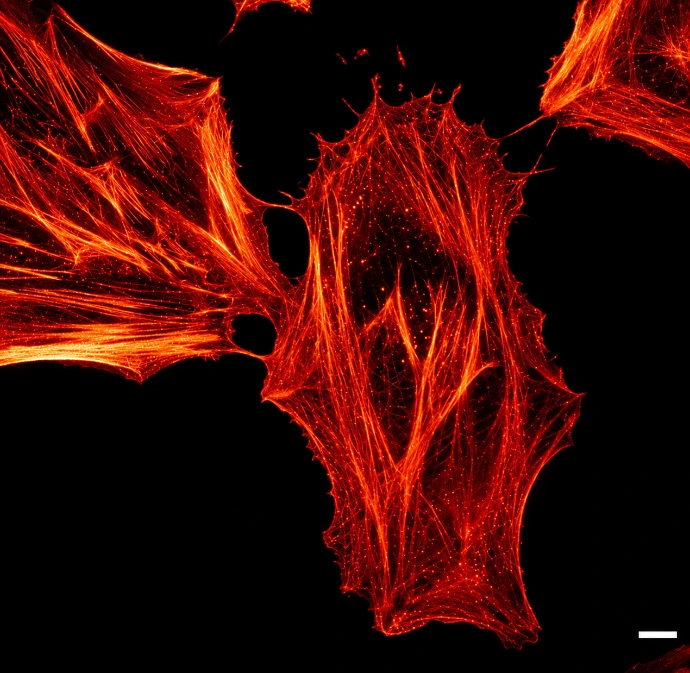
Cytoskeleton Imaging
Investigate actin and microtubule organisation with target-binding probes and detection formats for expanded samples.
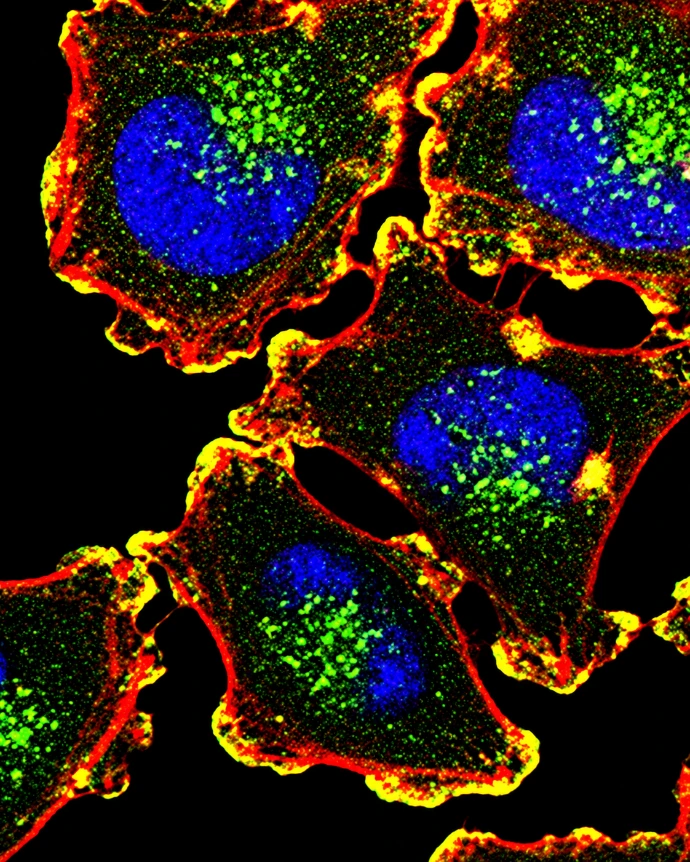
Protein & Antibody Labelling
Explore antibody-conjugation chemistry for introducing fluorescent labels or reactive handles alongside hydrogel-anchoring functionality.
Let's talk about your experiment
Tell us about your work and what you’d like to achieve. We’re here to answer your labelling questions and help you choose the right reagents. We'd love to hear from you!